
How to Build a Cheese Board
A good board is not about adding everything. It is about choosing a few cheeses with clear contrast, then giving every accompaniment a purpose.
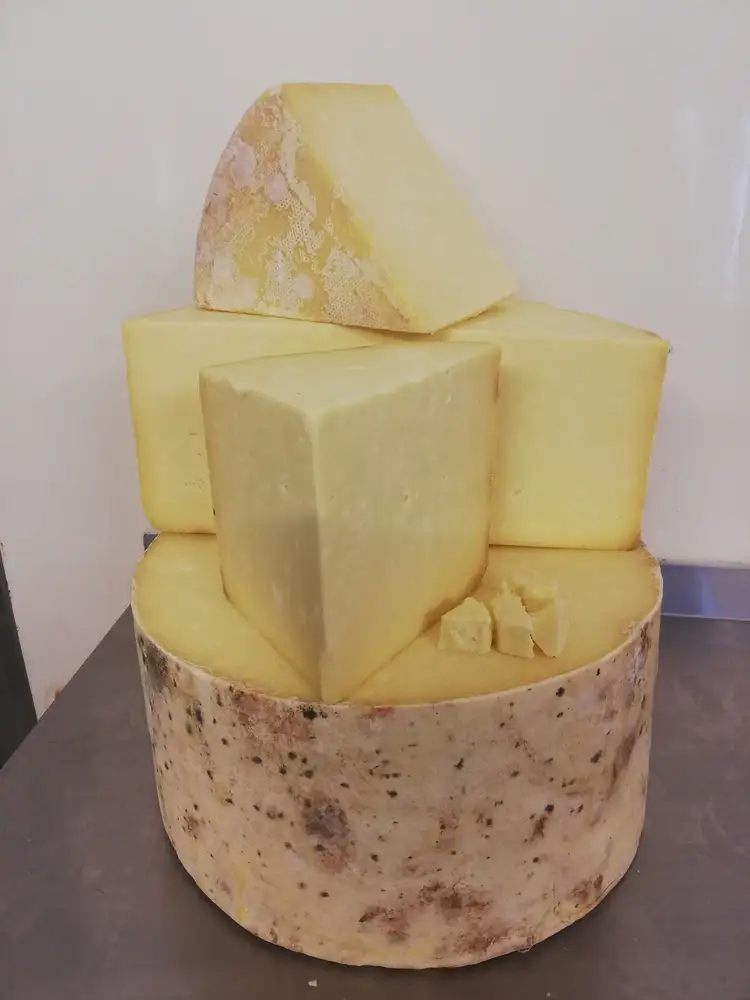
Start with the occasion, choose a small number of different cheese styles and build outwards. The result will be easier to serve, easier to understand and more enjoyable to share.
1. Begin with contrast
Several similar cheeses can blur into one another. A firmer cheese, a soft or creamy cheese and a blue cheese give you three distinct textures and flavour directions without making the board complicated.
If you would rather serve two cheeses, choose styles that clearly differ. With a larger board, add variety gradually; every extra cheese should bring something the others do not.
2. Choose for the occasion
A simple board after a meal needs less variety than a larger sharing spread. Think about how many other dishes are being served, how adventurous your guests are and whether the cheese is the main event or the finish.
For a gift or hamper, the same principle applies: a considered combination is often more memorable than a long list of similar items.
3. Give accompaniments a job
Use each addition to create contrast rather than clutter:
- Chutney can bring sweetness, sharpness or gentle spice beside rich cheese.
- Bread or crackers provide a neutral base and a change of texture.
- Fresh or dried fruit can add freshness, chew and sweetness.
- Yorkshire brack brings a rich, fruity element that belongs naturally on a Yorkshire table.
Keep portions of chutney and other strong accompaniments modest at first. Guests can always add more.
4. Arrange the board clearly
Place the cheeses first and leave enough room to cut each one. Add bowls or jars next, then fill the remaining spaces with bread, crackers or fruit. Separate knives help to keep a delicate cheese from picking up the character of a strong blue.
Serving for guests with allergies or dietary requirements? Check the current packaging or label and ask the stall team about the exact product before buying. Separate utensils can reduce mixing on the board, but they cannot guarantee that cross-contact has not occurred.
5. Turn the plan into a request
Once you know the styles you want, tell us the approximate quantity and whether the selection is for a board, a gift or a bespoke hamper. Browse our cheese selection for a starting point, then use the Hampers & Orders form to describe what you have in mind.
Choosing drinks too? Continue with our simple cheese and wine pairing guide.